

You've invested millions in AI tools. Your team attended the training. Everyone seemed excited at launch. But three months later? Single-digit adoption rates. Tools collecting digital dust. Teams reverting to their old ways.
Sound familiar?
According to MIT research, 95% of AI initiatives fail. Companies pour resources into cutting-edge technology only to watch it disappear into the void of unused software licenses and forgotten training materials.
But here's the thing: it doesn't have to be this way.
We sat down with Kate Stringfield, a Revenue Enablement Leader with over seven years as a seller and six-plus years in enablement, who led a global team of six enablers at Dialpad. Kate has been in the trenches of AI adoption, and she's discovered exactly why most rollouts fail—and more importantly, how to make them succeed.
In this article, we'll break down Kate's six critical pillars that separate successful AI adoption from expensive failures.
Before we dive into the solution, let's be honest about what's actually happening in most organizations right now.
Companies are making massive investments in AI tools, but they're seeing:
The pattern is painfully predictable. Leadership gets excited about AI's potential. They purchase a sophisticated platform. They schedule a few training sessions. Then they wonder why nobody's using it six months later.
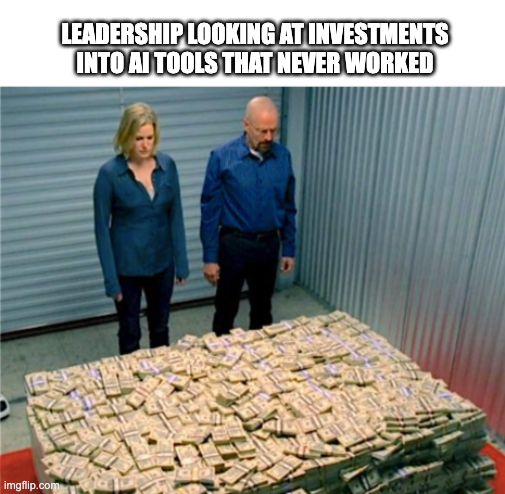
Kate has seen this movie play out repeatedly. But through her work rolling out AI across multiple teams, she identified exactly what separates success from failure. It comes down to six fundamental pillars that most companies completely overlook.
Here's where most companies go wrong right out of the gate: they skip straight to tool training.
It's like teaching someone to drive by putting them behind the wheel without ever explaining how a car works. Sure, they might eventually figure out the basics, but they'll never truly understand what they're doing or why.
Kate's approach is different. She starts with foundational AI literacy before anyone touches a tool.
What does AI literacy actually mean?
It means your team understands:
As Kate points out, "You need foundational knowledge before you can have good conversations with customers."
This is especially critical in sales enablement. If your sales reps are going to sell AI solutions or even just use AI tools effectively, they need to speak the language. They need to understand the technology well enough to explain it, defend it, and apply it intelligently.
Think about it: how can a sales rep confidently discuss AI capabilities with a prospect if they don't actually understand how the technology works? They can't. They'll fumble through conversations, give weak answers to objections, and ultimately lose deals.
But when you invest in true AI literacy first, everything changes. Your team gains the confidence to engage in meaningful conversations. They understand the "why" behind the tools you're implementing. They can make intelligent decisions about when and how to use AI in their workflows.
Here's a hard truth: the specific tool you choose matters far less than your strategy and integration plan.
Most companies approach AI adoption backwards. They see a shiny new tool, get excited about its features, purchase it, and then try to figure out how it fits into their operations.
Kate flips this entirely. Before any tool selection or rollout, she insists on answering these critical questions:
Notice what's missing from that list? Features. Capabilities. The impressive demo that wowed everyone in the meeting.
Strategy and integration come first. Always.
Think about it like building a house. You don't start by buying beautiful furniture and then trying to build rooms around it. You design the house first, understand how each room connects, and then select furniture that fits the space and serves the intended purpose.
AI adoption works the same way. You need to understand your business outcomes, your workflows, and your existing systems before you can intelligently select and implement any tool.
When Kate's team considers an AI tool, they map out exactly how it will integrate with their CRM, their content management systems, their sales processes, and their coaching frameworks. They identify the specific workflows where AI will add value. They understand how data will flow between systems.
Want to know the fastest way to drive adoption? Stop selling from the top down.
Instead, identify your champions and let their success stories do the selling for you.
Kate's team follows a four-step champion discovery process:
The psychology here is powerful. When a rep sees a peer winning with AI, they experience natural FOMO (fear of missing out). It's not management telling them to use a tool. It's seeing someone just like them achieving better results.
As one rep at Kate's organization put it after seeing a champion's story: "Wait, Sarah is using AI to prepare for calls and she's doubled her conversion rate? I need to figure out how she's doing that."
That's organic adoption. That's sustainable behavior change.
Champion stories also provide something else crucial: practical examples. Instead of abstract training about what AI could do, reps see exactly how a peer applied it in a real situation and got a real result.
This pillar might surprise you. It certainly goes against conventional wisdom about technology governance.
Kate takes a controversial approach: she doesn't prohibit people from using open-source AI models or unauthorized tools.
Wait, what? Isn't that a massive security risk? Shouldn't you lock everything down and force people to use only approved platforms?
Kate's philosophy is different. She believes it's better to understand what people are actually doing and help create safer environments than to drive usage underground with strict prohibitions.
Here's how her team approaches it:
This approach does something powerful: it builds trust and opens communication.
When you take a heavy-handed control approach, people don't stop using unauthorized tools. They just stop telling you about it. They go underground. They find workarounds. And then you have zero visibility into what's actually happening with your company data.
But when you approach it as a conversation, people are honest. They tell you what they're doing. They explain what they need. And you can work together to find solutions that are both effective and secure.
Kate's philosophy: "It's better to understand what people are doing and help create safer environments than to drive usage underground."
Kate has a warning that every enablement leader needs to hear: "Just like sales methodologies, AI fails without integration."
You can have the most powerful AI tools in the world, but if they exist as standalone systems that require extra effort to use, they'll be abandoned.
AI must be embedded in:
Think about the most successful technology adoptions in history. They succeeded because they integrated seamlessly into existing behaviors. Email didn't require you to change how you communicate; it enhanced it. Smartphones didn't require you to learn entirely new behaviors; they made existing behaviors easier.
AI adoption works the same way. The more friction you remove, the higher your adoption rates.
This means doing the hard work of integration upfront. It means connecting systems. It means embedding AI capabilities directly into the workflows your team already uses every day.
It's more work initially, but it's the difference between a tool that gets used and a tool that gets ignored.
Here's where most organizations completely miss the mark: they measure the wrong things.
Kate is blunt about this. Skip the vanity metrics. Stop tracking:
These metrics tell you nothing about whether AI is actually changing behavior or driving results.
Instead, focus on behavior change and business outcomes:
Are reps discussing AI solutions with customers? This shows true understanding and confidence, not just tool usage.
Are they building pipeline from AI conversations? This proves the AI training is translating to revenue opportunity.
Are conversion rates improving between stages? This demonstrates real performance improvement.
Is time-to-value decreasing for new hires? This shows whether AI is actually making your onboarding more effective.
The difference is profound. Login counts tell you who clicked a button. Pipeline generated from AI conversations tells you who's actually using AI to drive business results.
As Kate points out, you need to measure real change, not vanity stats. Attendance at a training session means nothing if behavior doesn't change afterward. Logging into a tool means nothing if it doesn't lead to better outcomes.
This requires more sophisticated measurement, yes. You need to connect your AI initiatives to your business intelligence systems. You need to track behavior changes, not just usage statistics.
But this is what separates successful AI adoption from expensive failures. When you measure what actually matters, you can identify what's working, what's not, and where to invest more resources.
The AI revolution is here, but technology alone won't transform your sales organization. As Kate Stringfield's experience shows, successful AI adoption requires a thoughtful, systematic approach that prioritizes people over tools.
The six pillars: AI literacy, clear vision and integration, champion stories, conversation over control, integration everywhere, and measuring what matters, provide a proven framework for avoiding the 95% failure rate and achieving lasting adoption.
The question isn't whether your team should adopt AI. The question is whether you'll implement it strategically or become another statistic in the failure column.
Remember: foundation first, strategy over tools, champions over mandates, conversation over control, integration over isolation, and behavior over vanity metrics.
Follow these principles, and you won't just survive the AI transformation. You'll thrive in it.
In this episode of SellMeThisPen Podcast, Michael and Kate discuss why most AI rollouts fail, the six critical pillars for lasting AI adoption, and how to measure real behavior change instead of vanity metrics. Kate shares battle-tested strategies from rolling out AI across multiple sales teams and reveals the controversial approaches that actually work.
Kate Stringfield is a Revenue Enablement Leader with over seven years as a seller and six-plus years in enablement. She led a global team of six enablers at Dialpad and champions practical AI workflows with sensible data guardrails. Her expertise in AI adoption has helped multiple organizations move from single-digit adoption rates to sustainable, organization-wide AI integration.


